Five Things Every Company Should Check Before Hiring Foreign Workers in Japan
More and more companies in Japan are considering hiring foreign talent to address labor shortages.
However, some employers rush the hiring process without fully confirming the applicant's residence status or employment conditions. As a result, the employee may not be legally permitted to perform the intended work.
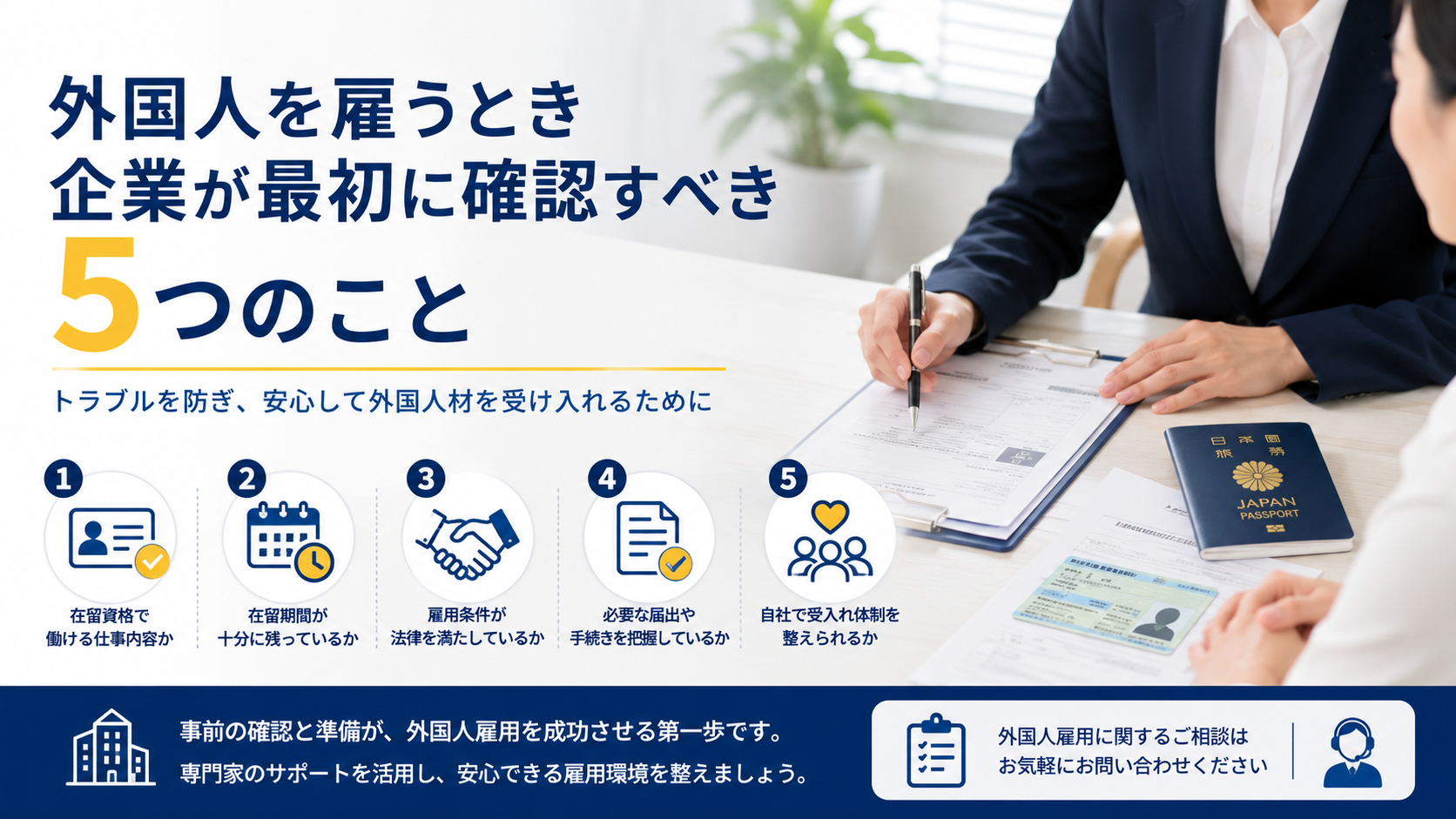
Hiring foreign nationals involves additional considerations that do not apply when hiring Japanese employees. To avoid future problems, companies should confirm the following five points before making an offer.
1. Is the Job Compatible with the Employee's Residence Status?
The first thing to check is the applicant's residence status.
Each status of residence permits specific activities. Even within the same company, certain job duties may not be allowed under the employee's current visa status.
Before hiring, carefully review the residence card and confirm that the planned job matches the permitted activities.
2. Is There Enough Time Remaining on the Residence Period?
The residence card indicates the expiration date of the individual's stay.
If the expiration date is approaching, confirm whether a renewal application has already been filed. Even during the renewal process, the employee's work authorization may vary depending on the circumstances.
If you are unsure, consult an immigration professional.
3. Do the Employment Conditions Comply with Japanese Law?
Foreign employees must not receive unfair treatment simply because they are foreign nationals.
Wages, working hours, holidays, and other employment conditions must comply with Japanese labor laws.
For workers under the Specified Skilled Worker (SSW) program, employers must provide wages equal to or higher than those paid to Japanese employees performing equivalent work.
4. Do You Understand the Required Notifications and Procedures?
After hiring a foreign employee, employers are generally required to submit notifications to Hello Work.
Depending on the employee's residence status, additional notifications to the Immigration Services Agency of Japan may also be required.
Compliance does not end once the employee is hired. Ongoing administrative procedures are equally important.
5. Does Your Company Have an Appropriate Support System?
A proper support system helps foreign employees work and live comfortably in Japan.
For companies hiring Specified Skilled Workers, implementing a support plan is often mandatory.
Employers may provide the required support themselves or outsource it to a Registered Support Organization. Planning this in advance helps ensure smooth operations after hiring.
Conclusion
Hiring foreign employees is not just about recruitment—it also requires ongoing legal compliance and proper employment management.
Failing to verify residence status or neglecting required notifications can create significant risks for both the employer and the employee.
If your company is planning to hire foreign workers, confirming these points before employment can help prevent many common problems.
Our office provides comprehensive support for foreign employment, including immigration consultations, residence status applications, and Specified Skilled Worker procedures.
For more information about our foreign employment support services, please visit: